



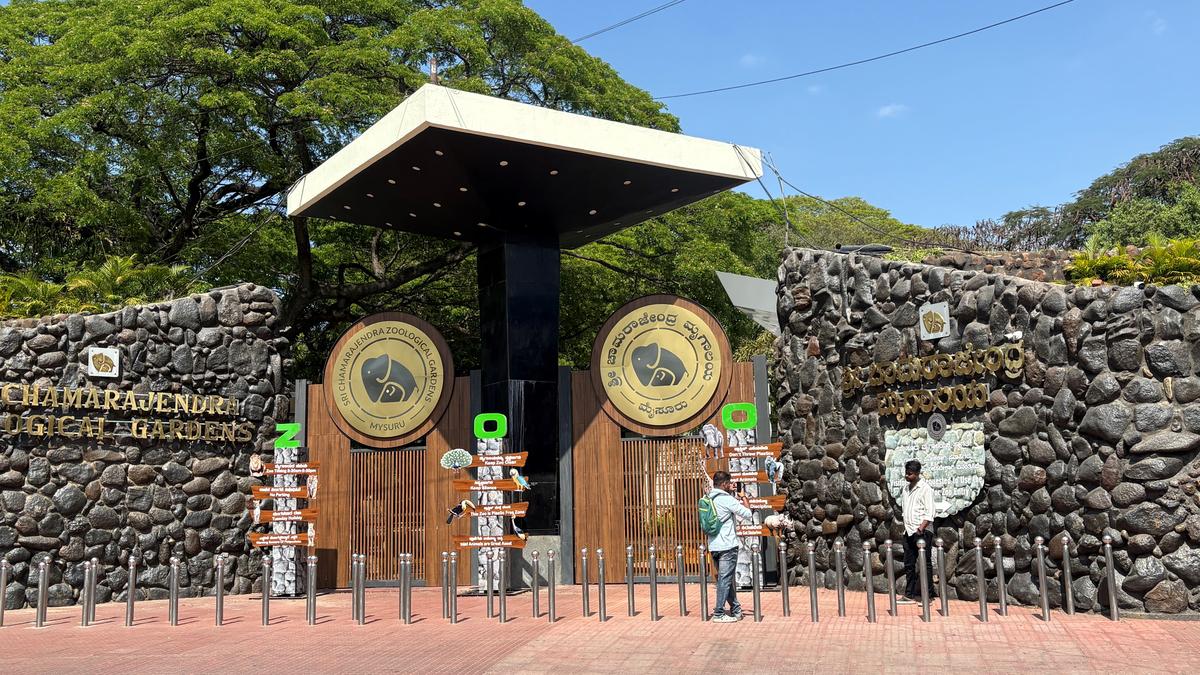
The management of Mysuru zoo has taken several precautionary measures over the scare of bird flu.
| Photo Credit: M.A. Sriram
Amidst the bird flu scare, the management of the century-old Mysuru zoo has stepped up precautionary measures to safeguard its animals and birds. These measures extend beyond the zoo to the Karanji Lake Nature Park and the Animal Rescue Centre at Koorgalli on the outskirts of the city, which are controlled by the zoo management.
Comprehensive preparedness
“Preparedness is in place to combat the spread of communicable diseases in captive animals,” said Zoo Executive Director Rangaswamy.
To ensure strict biosecurity, disinfection protocols have been improved at all entrances. Every staff member, officer, and vehicle carrying food or materials into the zoo through Gate No. 2 must pass through a designated disinfectant path.
Additionally, disinfection foot dips have been installed at both staff and visitor entry points. These dips are also placed at the entrances of animal and bird enclosures to minimise the risk of cross-infection. Visitors and staff are being educated on the importance of using foot dips.
Zookeepers have been instructed to sanitise their hands before and after handling animals, food, and waste materials.
Clinical surveillance
All keepers have received training to recognise abnormal clinical signs in animals. Any such observations will be closely monitored by veterinarians during their daily rounds.
Similarly, personnel at Karanji Lake Nature Park have been advised to report any unusual deaths among migratory birds immediately. If required, surveillance of both captive and migratory birds will be conducted under the guidance of scientific experts.
To detect potential infections early, fecal samples from captive birds at the zoo and Karanji Lake, as well as from migratory birds at the lake, will be collected and sent for testing as per directives from the Regional Disease Diagnostic Laboratory.
Monitoring of poultry supply
Live fowl brought to the zoo undergo thorough physical examinations by veterinarians for any clinical signs of disease. After the examination, birds are slaughtered, and the dressed chicken is carefully washed with a potassium permanganate solution, followed by hot water, before being served to animals.
In the event of a heightened bird flu threat in and around Mysuru, the zoo recommends sourcing processed chicken from reputed suppliers to eliminate the risk of infection from live poultry, a note from the zoo stated.
Rapid Response Team
A Rapid Response Team (RRT) has been formed, consisting of a veterinarian, lab technicians, and four keepers. This team has been trained to act swiftly in case of an outbreak.
In the event of an alarming situation, movement restrictions will be enforced within the zoo. Staff will be prohibited from visiting poultry farms, bird sanctuaries, or other zoos until the threat is fully contained. With these stringent measures in place, Mysuru zoo aims to protect its animals and visitors while preventing the spread of bird flu.
Published – March 11, 2025 09:08 pm IST