



Dainty longleg (Merogomphus aryanadensis)
| Photo Credit: SPL
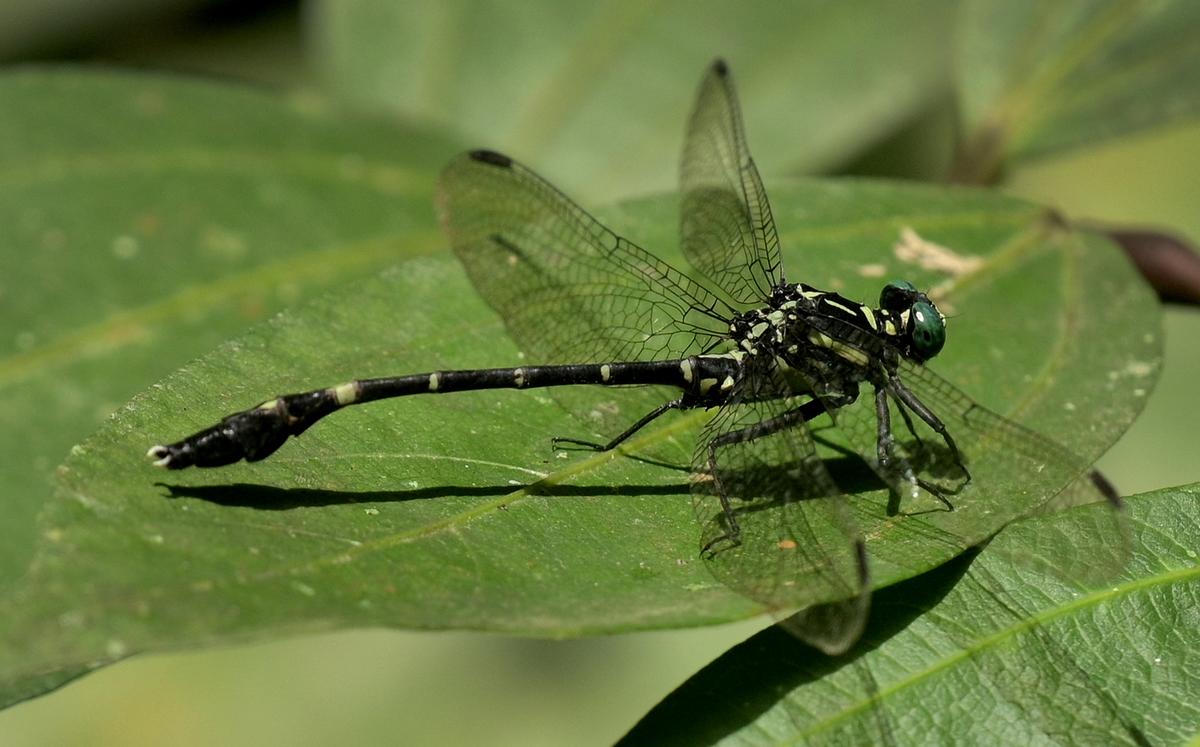
Dark Longleg (Merogomphus flavoreductus)
| Photo Credit:
SPL
A team of researchers from Kerala and Maharashtra have discovered two new species of dragonflies from villages in the Western Ghats. Both species belong to a group of dragonflies known as clubtails (Family gomphidae), so named because of the club-like swollen appearance of their abdomen.
The newly described species, dainty longleg (Merogomphus aryanadensis) and dark longleg (Merogomphus flavoreductus), have distinctive anal appendages, genitalia, and subtle differences in body markings that help in separating them from the existing species of the genus Merogomphus, according to the researchers.
Daintylongleg species has been discovered from Manjadininnavila, Aryanad grama panchayat, Thiruvananthapuram, that adjoins the forests of Peppara Wildlife Sanctuary. It was first photographed in 2020, but due to the high seasonality shown by the species and presence of elephants in the area, further studies on it could be done only in 2024. It shows high microhabitat specificity, recorded only from small streams shaded by Ochlandra reeds. The species has been named after Aryanad, as a tribute to the rich biodiversity it hosts.
Dark longleg has been discovered from Hadpid village in Sindhudurg district, Maharashtra. It was initially recorded in 2021 from a small stream abutting orchards and forests, but was misidentified due to its close morphological resemblance to malabar longleg (Merogomphus tamaracherriensis). The specific epithet of the new species points to the reduced yellow markings on its body.
In Zootaxa
The team behind this discovery includes Vivek Chandran and Subin K. Jose, both researchers from Christ College (Autonomous), Irinjalakuda; Reji Chandran, a naturalist from Aryanad; Dattaprasad Sawant and Krushnamegh Kunte, both researchers affiliated to the National Centre for Biological Sciences, Bengaluru; and Pankaj Koparde, a researcher affiliated to MIT World Peace University, Pune. The study has been published in the international journal Zootaxa.
Published – March 05, 2025 08:20 pm IST